
Common Types of Truck Accidents in Swansea
Published: Oct 24, 2025 in Truck Accident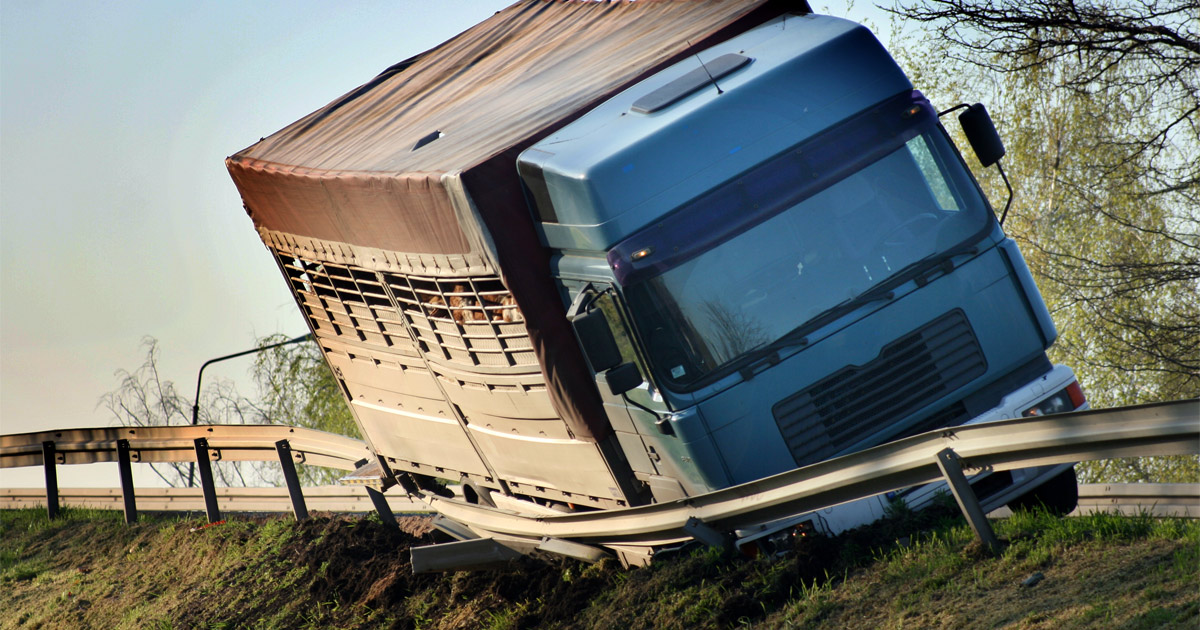
Every day, millions of Americans share the road with massive commercial trucks that can weigh up to 80,000 pounds when fully loaded. While these vehicles keep our economy moving, they also create serious safety concerns for everyday drivers. And when truck accidents happen, the consequences can change your life.
What Causes Rear-End Truck Collisions?
Picture this: You are driving down the interstate when traffic suddenly slows ahead. While you might be able to stop your car quickly, that 18-wheeler behind you is a different story.
“Rear-end” truck crashes make up about 20% of all big rig accidents, and it is easy to see why. A fully loaded semi traveling at highway speeds needs nearly 525 feet (almost two football fields!) to come to a complete stop. Compare that to your passenger car, which can stop in about 316 feet under the same conditions.
These crashes often happen when truck drivers underestimate how much space they need or get distracted for just a moment. The sheer weight and momentum of these vehicles mean that even experienced drivers can find themselves unable to stop in time when traffic conditions change suddenly.
How Do Jackknife Accidents Happen?
If you have ever watched a large truck lose control, you might have seen the trailer swing out sideways, creating an L-shape that looks like an open pocketknife. This terrifying scenario, called “jackknifing,” typically starts when something forces the truck driver to brake hard or swerve suddenly—maybe black ice on the road, or another driver cutting them off without warning.
When the trailer starts to slide sideways, it can sweep across several lanes of traffic in seconds. While jackknife crashes account for only about 3.5% of fatal truck accidents, they create chaos on busy highways because other drivers have little time to react when a massive trailer suddenly blocks multiple lanes.
What Makes Rollover Accidents So Dangerous?
Imagine a truck driver taking an exit ramp a little too fast, or hauling a load that was not properly balanced. Suddenly, the truck’s high center of gravity works against it, and the entire vehicle tips over. These “rollover” crashes are especially common on highway ramps and curves, where even experienced drivers might misjudge the physics involved.
Why Are Underride and Override Accidents So Devastating?
Some truck accidents are so horrific that they are difficult to imagine. “Underride” crashes are an example: These happen when a smaller vehicle somehow slides underneath a truck trailer, while “override” accidents occur when a truck rides up and over a car. The physics involved in these crashes are brutal. There is no way for a regular passenger vehicle to withstand the crushing weight of a commercial truck.
While these accidents represent only about 1% of all traffic deaths, they have the highest fatality rate of any crash type. The difference in size and weight between trucks and cars creates forces that standard safety features cannot handle.
What Causes Tire Blowout Accidents?
Few things are more terrifying for truck drivers than hearing a tire explode while traveling at highway speeds. When a front tire has a “blowout,” truck drivers can instantly lose control of their vehicle, veering into oncoming traffic or careening off the roadway entirely.
How Do Wide-Turn Accidents Occur?
Anyone who has driven in a city has probably seen truck drivers making wide turns at intersections. These massive vehicles need extra room to navigate corners safely, which sometimes means swinging into adjacent lanes. Unfortunately, not all drivers understand this, and some try to squeeze past a turning truck.
The real danger comes from the truck’s “blind spots:: those large areas around the vehicle where the driver simply can’t see other cars. When a truck driver starts a wide turn and fails to spot a vehicle in their blind spot, the results can be catastrophic.
What Are Head-On Truck Collisions?
“Head-on” crashes between trucks and passenger vehicles represent the absolute worst-case scenario. When two vehicles traveling in opposite directions collide, the combined force and momentum create devastating impacts.
For passengers in smaller vehicles, the physics involved in these collisions are almost always catastrophic. The energy transfer from two large masses moving in opposite directions creates forces that human bodies and vehicle safety systems often cannot handle.
Get Legal Help With the Swansea Truck Accident Lawyers at The Cates Law Firm
When you or someone you love has been hurt in a truck accident here in Illinois, trust the experienced and compassionate Swansea truck accident lawyers at The Cates Law Firm. Located in Swansea, Illinois, we proudly serve clients in the surrounding areas. For a free consultation, call today at 618-277-3644 or contact us online.